

By July, a villa pool in Dubai can feel less like a place to cool off and more like a warm bath. The water climbs past 33°C, the first swim of the day isn’t refreshing, and the kids stop asking to go in.
It’s fixable, and the fixes sit at very different price points. Some cost almost nothing and some cost AED 15,000 or more. Which one makes sense depends on how hot your pool actually gets, how much shade it has, and whether you’re building a new pool or living with an existing one.
Why Dubai pools get so warm
A pool is a large tank of water sitting in direct sun for most of the day. The Gulf itself stays above 30°C through the summer, and the air barely cools after dark, so the water has little chance to shed the heat overnight. Shallow pools warm fastest because there’s less water to absorb the sun, and a dark interior finish takes in more heat than a pale one.
For comparison, hotel pools in Dubai are normally chilled to around 24 to 26°C in summer. That’s the gap between a pool left to itself and one that’s actively managed.
Start with shade
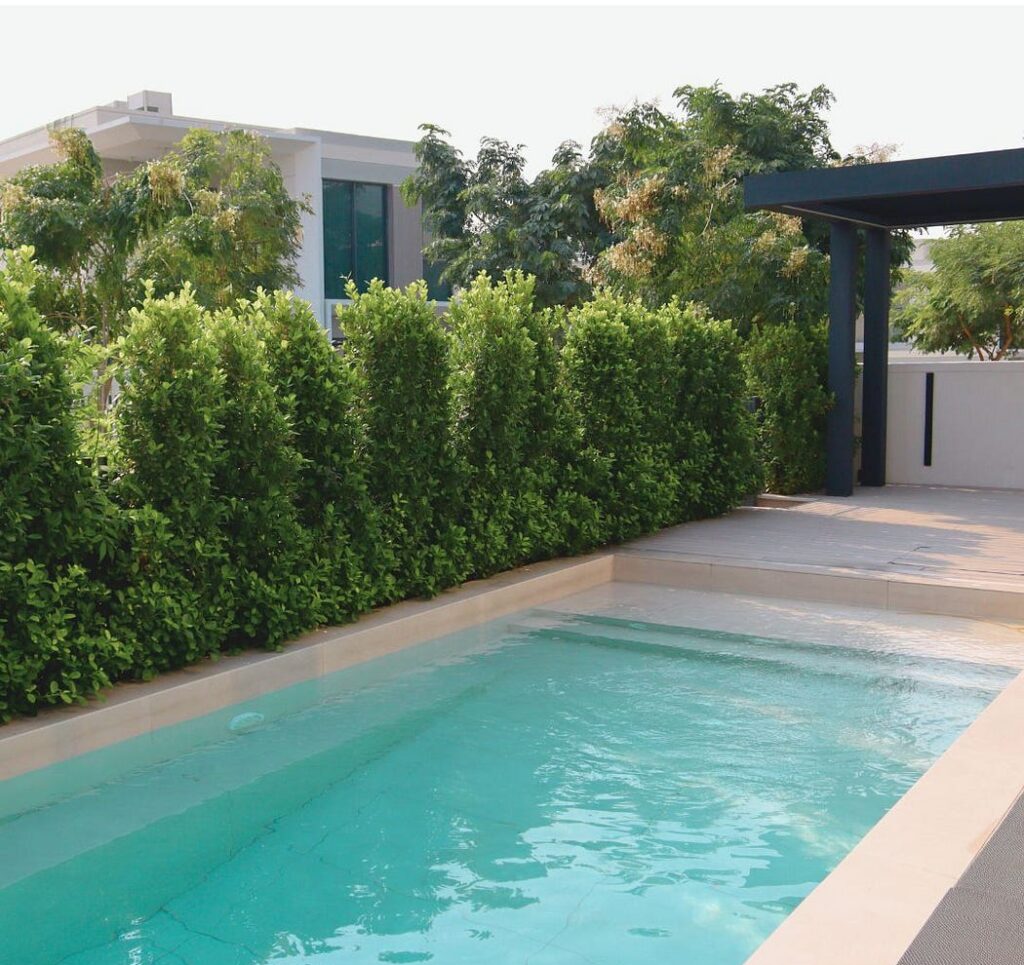
Shade is the cheapest fix and the one owners tend to skip, because it doesn’t feel like pool equipment. A pergola, a shade sail or dense planting on the sunny side keeps the sun off the water through the hottest hours. It won’t chill the pool, but it stops the heat building up in the first place, and it makes the deck usable at midday too. A solid-roofed pergola or sail does far more than palms, which look right but cast very little shade over water.
Covers and night-time habits
A pool cover helps if it’s opaque or light in colour, because it keeps the sun out and cuts evaporation. Avoid the clear bubble-type solar blankets sold for cooler countries. They’re designed to trap heat, which is the opposite of what you want here. And a cover only works if someone puts it on every day, which is why many end up folded in a corner by July.
Running the pump and any waterfall or water feature overnight lets the water give up some heat to the night air. The effect is small in July and August, when nights stay warm, but it helps in the shoulder months.
Pool chillers
A chiller is what most Dubai owners end up with. It pulls pool water through a heat exchanger, takes the heat out and returns it cooler. A Dubizzle guide to pool temperature says a chiller can lower the water by up to ten degrees, which is the difference between a 35°C pool and a 25°C one.
Property Finder’s pool cost guide puts cooling for a small to medium villa pool at about AED 15,000 to 20,000, with the price rising for bigger pools. The same guide estimates electricity and water for a pool at AED 500 to 1,800 a month, depending on pumps, cooling, heating and top-ups.
Two practical points matter more than the brand. The unit gives off heat as it works, so it needs open space and good airflow. A chiller squeezed into a closed plant room runs harder and wears out sooner. And size matters: an undersized unit runs all day and still can’t catch up in August.
Heat pumps
A reversible heat pump does the cooling job and can also warm the water in winter. Guides list them at roughly AED 15,000 to 25,000, depending on the model and pool size. If you swim from December to February and would like the water warmer, one unit covers both. If you only care about summer, a cooling-only chiller is simpler.
If you’re building a new pool
Cooling is cheapest when it’s planned. Before the drawings are finalised, talk to your contractor about four things: how deep the pool will be (more water holds its temperature better), where the shade will come from, whether a lighter finish suits the design, and where the plant room goes. Leave space there with airflow and a power supply for a chiller, even if you don’t buy one now.
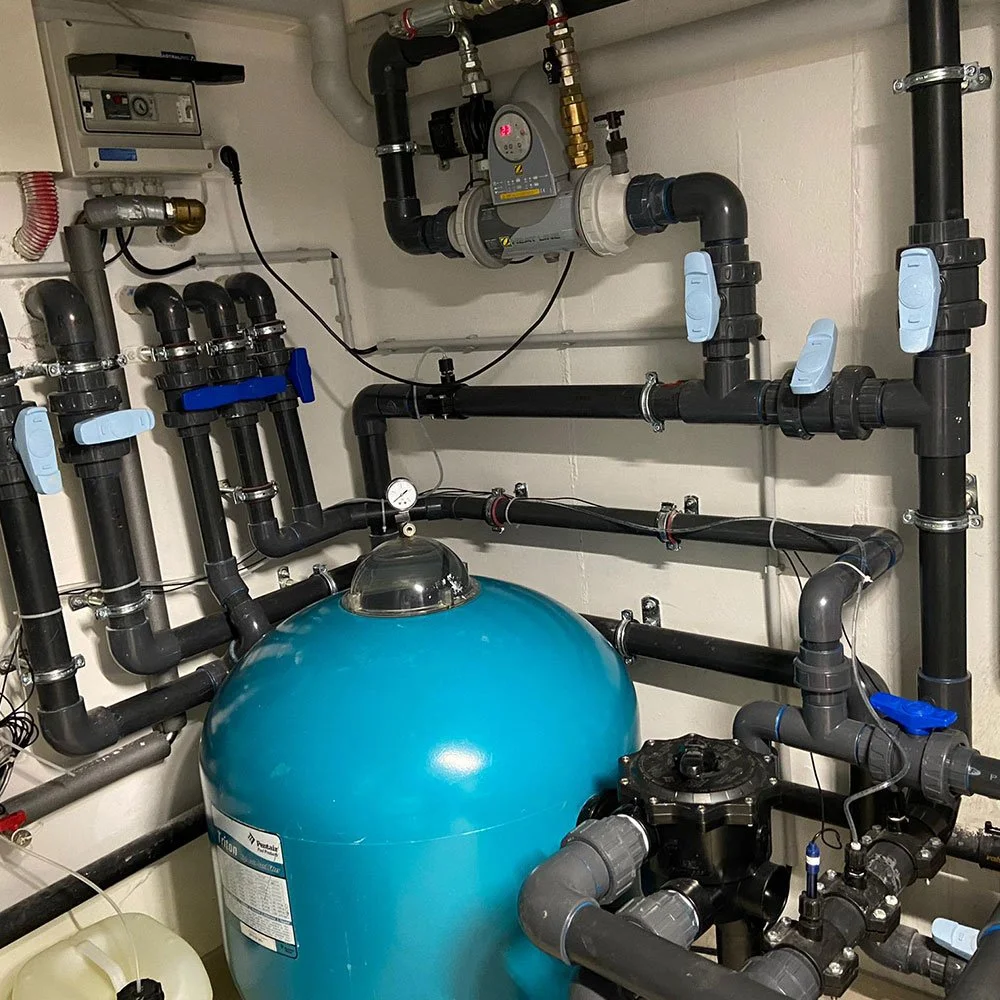
Adding cooling later usually means opening up pipework and finding a spot for the unit, and the spot doesn’t always exist. When we quote a build, pool cooling is one of the extras priced alongside size, design and site access. Our guide to what a pool costs to build in Dubai shows how those add up, and a design consultation is the place to settle shade and equipment before anything is filed.
What to ask before you buy a chiller
- What size unit does my pool need, and what temperature will it hold in August?
- Where will it be installed, and does that spot have airflow and a power supply?
- What will it cost to run per month in summer?
- Is it cooling-only or reversible?
- What does the warranty cover, and who services it in Dubai?
A sensible order is shade first, then a chiller if the water is still too warm by midsummer. A chiller fighting a pool that sits in full sun all day will work harder, and cost more to run, than the same chiller over a shaded pool.
Questions owners ask
How hot can pool water get in Dubai?
Without shade or cooling, a villa pool can pass 33°C in peak summer, and the Gulf itself stays above 30°C. At that point the water stops being refreshing. The shallow end of a small pool warms fastest.
Is it worth chilling a pool in Dubai?
If you use the pool between June and September, usually yes. If it’s mostly for show, or the family is away for the summer, shade alone may be enough.
Does a chiller use a lot of electricity?
It’s one of the bigger loads on a pool, and it works hardest when it’s hottest. Shade reduces how hard it has to work, so shade plus a chiller usually costs less to run than a chiller alone.
The best time to sort this out is in the cooler months, before the first hot week. If you’re planning a build, we’ll work cooling into the design as part of our swimming pool construction company service in Dubai. If you already have a pool and want to know what would suit it, call or WhatsApp +971 50 660 2296 and tell us what you have. Our pool maintenance plans cover keeping it running through the season.
