

Building a private swimming pool in your backyard is one of the best ways to beat the Dubai heat, but many villa owners are surprised by the complexity of the process. If you’re planning a project with a pool design and build company, understanding the timeline is essential for managing your expectations.
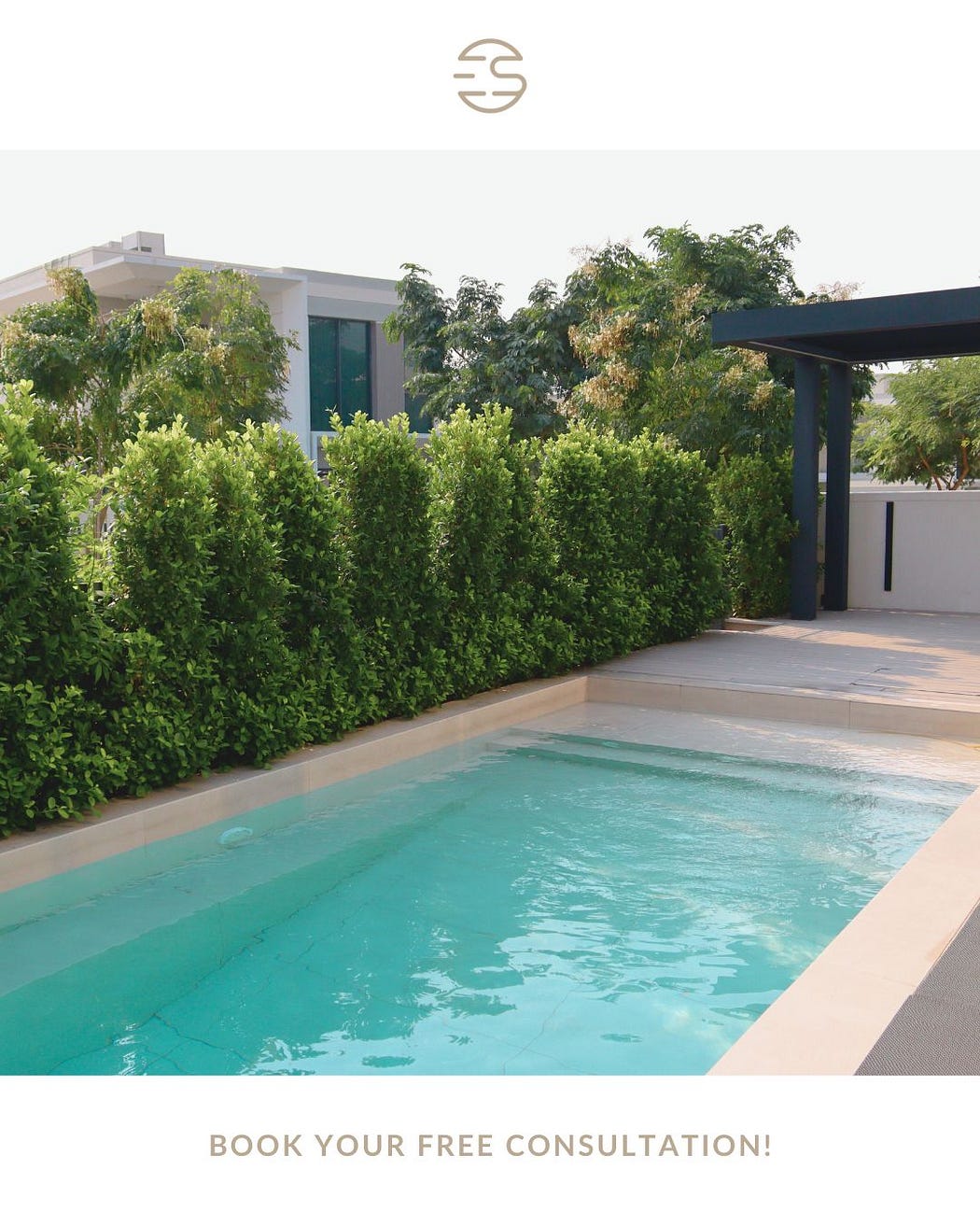
In 2026, the average timeline to build a swimming pool in Dubai is 6 to 12 weeks. However, this can vary based on your community, the complexity of the pool design and the speed of government approvals.
Phase 1: Design & Approvals (2–4 Weeks)
Before the first shovel hits the ground, your project must exist on paper and be approved by the authorities. This is often the most variable phase of swimming pool construction in Dubai planning.
Pro Tip: Working with experienced Swimming pool contractor in Dubai who understand the “e-permit” system can shave a week off this process.
Design Finalization: Working with a pool designer to create 3D renders and technical drawings (1 week).
NOCs & Permits: You must obtain No Objection Certificates (NOCs) from your developer (e.g., Emaar, Nakheel etc) and final approval from Dubai Municipality (DM) or Trakhees.
The answer isn’t simple, it depends on the shell material, the quality of the initial engineering, the surrounding climate and most critically, the commitment to regular care. While the core structure can last a lifetime, understanding the lifecycle of all components is key to maximizing your return on investment.
The single greatest determinant of your pool’s longevity is the material used for the shell by swimming pool contractor.
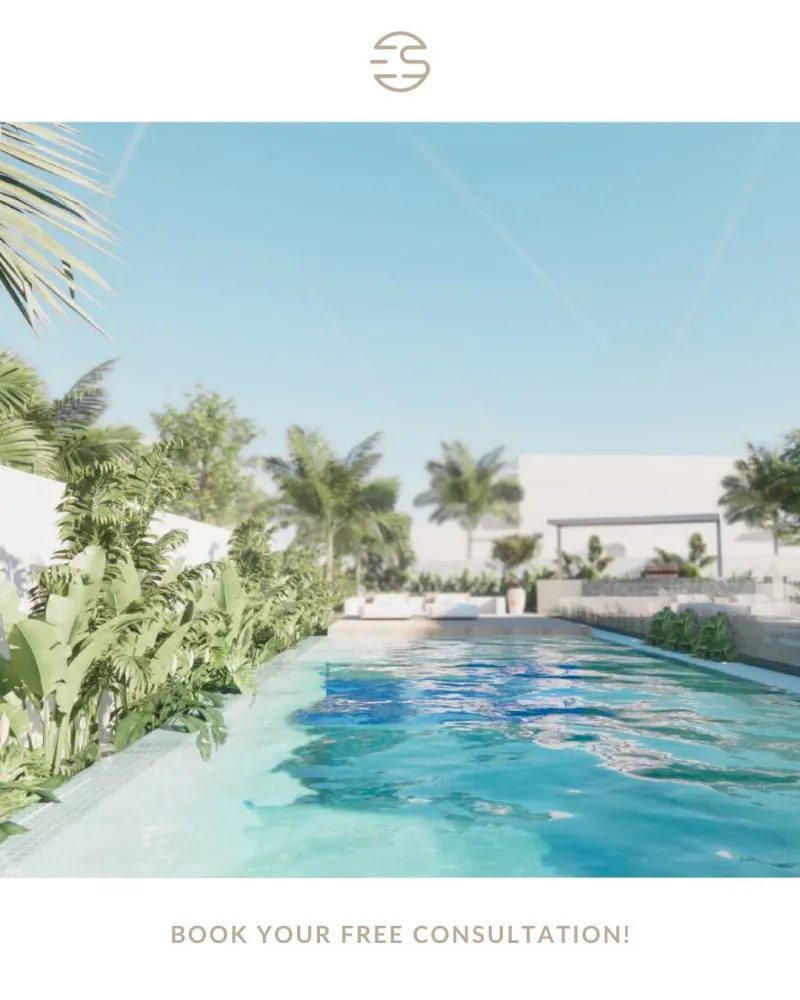
Concrete (Gunite/Shotcrete) Pools: The Structural Champions
Expected Lifespan of the Shell: 50+ years (Often the life of the home)
Concrete pools (often referred to by their application methods, Gunite or Shotcrete) are the gold standard for durability and custom design. They are poured into place and reinforced with steel, making them structurally robust and capable of withstanding soil movement over long periods.
Maintenance Cycle:
- Resurfacing: While the concrete shell itself is virtually permanent, the interior finish (plaster, tile or pebble aggregate) needs replacement or major refinishing every 10 to 15 years. This process is crucial to prevent leakage and surface erosion.
- Maintenance Effort: Concrete is porous and requires meticulous chemical balancing and frequent brushing to prevent algae and scaling.
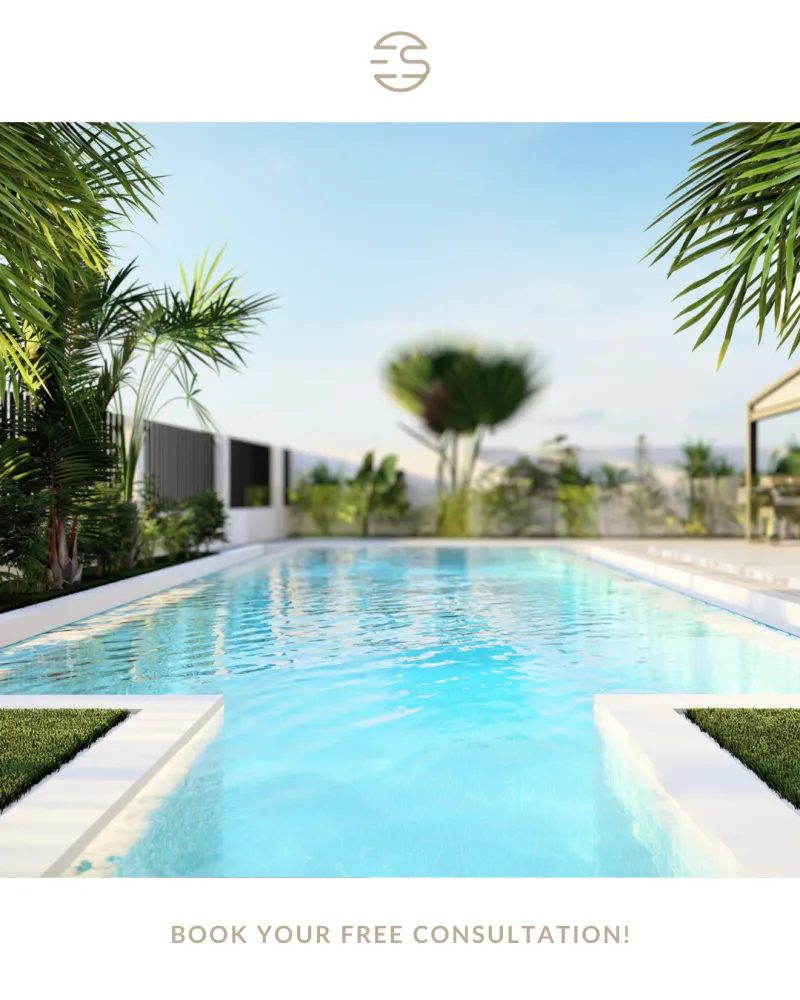
Exterior Space Insight: Choosing concrete gives you infinite design flexibility (infinity edges, custom depths, integrated spas). When paired with high-quality waterproofing and resurfacing materials like high-end quartz or glass tile, the pool maintains a luxury finish that lasts.
Critical Factors That Determine True Longevity
The raw material is just the starting point. The true lifespan of your investment is ultimately determined by the quality of execution and commitment to care.
1. Initial Construction Quality (The Exterior Space Guarantee)
A pool is only as good as its foundation. Shortcuts in the build process guarantee expensive problems down the line. We emphasize:
- Structural Engineering: Proper steel reinforcement and concrete mixture ratios (for concrete pools) to handle soil movement and hydrostatic pressure.
- Waterproofing: Applying professional-grade waterproofing membranes and ensuring optimal soil compaction during backfilling to prevent structural settling and leakage.
- Plumbing Integrity: Using durable, high-pressure PVC pipes and fittings to withstand years of chemical exposure and pressure cycling.
Press enter or click to view image in full size

2. Unwavering Water Chemistry Balance
Poor water balance is the number one cause of premature pool aging.
Calcium Hardness: If the water is too “soft”, it will seek calcium from the only available source — your concrete shell or plaster finish — leading to etching and degradation.
PH Levels: The ideal range is 7.4 to 7.6. Water that is too acidic (low PH) will corrode metal components (ladders, heaters) and leach minerals from the plaster. Water that is too alkaline (high PH) leads to scaling and staining on tiles and surfaces.
Total Alkalinity (TA): This acts as a buffer for PH. Keeping it stable (80–120 ppm) prevents large, damaging swings in acidity.
3. The Lifespan of Pool Equipment
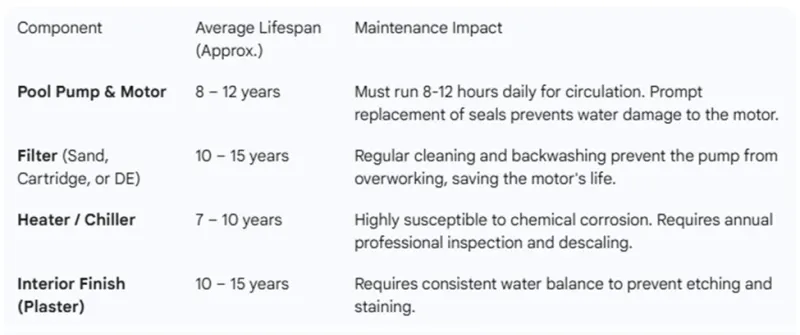
The surrounding machinery is the “heart and lungs” of your pool and will require replacement well before the pool shell. Consistent professional maintenance is key to extending the life of these costly components:
Protecting Your Investment for Decades
A swimming pool built by Exterior Space is designed for extreme environmental conditions and structural integrity. By combining our superior installation standards with your commitment to routine care, you guarantee your pool’s place as a lasting architectural statement.
